Pages

Showing posts with label books. Show all posts

The New Republic: Dickens's Writing "Difficult, Obscure"

Over at The New Republic, Hillary Kelly lashes out at Oprah for choosing Dickens as her next book club reading. While obviously I share some of the shock and awe at Oprah's power, Kelly lets it cloud her judgment, ranting that the average reader will have trouble unpacking "Dickens’s obscure dialectical styling and his long-lost euphemisms." Huh? Dickens's euphemisms and ironies are often painfully straightforward, and "dialectical stylings" is a phrase that confuses me, even though I just came back from a lunch spent reading Fredric Jameson. My best guess at what she's referencing here is the doubleness of "It was the best of times, it was the worst of times," but honestly, it's Kelly's thoughts on Dickens, not Dickens's own writings, that are difficult to understand.

It's sad, because Kelly's sense of Oprah's ridiculousness is right, but her reasoning is actually backwards. In her fervor to protect the classics from Oprah's rapacious grasp, she perversely bashes Winfrey for "her sentimentalized view of Dickens," who was, in case anyone forgot, an author of sentimental fiction. His books are chock full of dying orphans, for Pete's--or should I say Little Nell's?--sake. Then Kelly worries about Winfrey's "ignorance of Dickens’s authorial intentions," as though those should be the cornerstone of any reading experience.

Weirdest of all, though, is when Kelly says that Dickens wrote "some of the more difficult prose to come out of the nineteenth century." In addition to being false by any standard, this claim contributes to the sense that these old books can't be read without some kind of literary guide. On this point, at least, Kelly and Oprah seem to be united: Oprah offers extensive character guides and other paraphernalia for the reading through her website, as though the literature itself is so alien that it can only be approached through some kind of spacesuit-like extra-textual apparatus. In one of the funnier parts of Kelly's piece, she quotes from the Dickens conversation going on at O's website:

A glance at the discussion boards on Oprah’s website confirms my worst fears. “I have read all the print-outs and character materials and the first two pages,” said one reader, referring to supplementary reading guides produced by the Book Club. “The first two pages are laden with political snips and I am trying to grasp what it is saying. I was able to look up cock-lane and figure that out, but where do I go to figure out the innuendos?”
If only this person would read the novel, rather than spending time trying to diagram the meaning of its every word. In a weird way, the problem with Oprah's selection is not her decision to approach a canonical classic from a popular standpoint, but her decision to approach a canonical classic as A Canonical Classic. Sentimentalizing Dickens is only appropriate, and finding your "self" in a Victorian novel, while sort of silly, isn't really at odds with what many critics claim (rightly or wrongly) was one of the functions of the novel in the first place--the creation of the reader as a "unique" "individual" subject, etc., etc.

Book clubs, whether Oprah's or not, often plunge into books with minimal context, and that's fine. It's the idea that readers need to tiptoe around the big boys, and approach them with a semblance of historical or scholarly understanding that they can't possibly attain in the time allotted, that makes this whole thing so painful. Oprah and her followers are foreigners to this particular cultural soil, but they have an embarrassingly sincere desire to show that they know how lucky they are to tread on sacred ground, so they work too hard to behave with what they conceive of as humility and cultural respect, nodding knowingly to show that they understand why This Stuff Is Important. A more candidly naive approach, one less fraught with the sense that there's some mystery Oprah & co. need to show they understand, would make the whole affair a lot less ridiculous.

Oprah loves the Dickensian aspect

Victorians have been making lots of headlines recently. Last week, the NYT reported on the application of search software to Victorian titles as an aid to scholarship, even as Oprah announced that her next book club picks will be two works by Charles Dickens: A Tale of Two Cities and Great Expectations. Members of the audience appear to be filled with nearly childlike delight at the announcement.

Of course, when Oprah preceded her announcement with the hint that she was going with a selection that was "old, OLD school, people!", I immediately began chanting to myself, "Please let it be Pliny, please let it be Pliny." But, in a stunning confirmation of the fact that different people perceive time differently, Oprah unveiled a new Oprah edition of the two classics, nicely packaged together by Penguin for just this purpose.

As Omnivoracious at Amazon points out, the rationale behind the duplex edition might have something to do with the difficulty of capitalizing on an Oprah selection that is entirely in the public domain. Jimmy Fallon put it a little bit more ironically the other night when he noted, with a tinge of jealousy, that Dickens is "gonna get rich."

It's not clear why Oprah picked these two works, but she did admit that she'd never read Dickens, and breathlessly panted to Jonathan Franzen: "Is A Tale of Two Cities what everyone says it is?" (After claiming to have read all of Dickens, Franzen acknowledged that it's "a real page-turner.") As for my guess about why she picked the novels she picked, two words: high. school. I read AToTC in high school, but other sections of our ninth-grade English class read Great Expectations, which seems to be the most widely read Dickens in the U.S., so far as I can tell. (It inspired Pip on South Park, didn't it?)


I kind of wish she'd done something more adventurous, picking a longer work that doesn't get assigned to 7/10 high schoolers in America, but oh well. One upside of this, hopefully, will be renewed interest in Great Expectations in time for the Dickens Universe conference at Santa Cruz next summer, which is spotlighting GE as it kicks off an early celebration of the Dickens bicentennial.

It made me think about Oprah a lot, though, and what she could do with her publishing power--not so much in terms of championing new authors, but in actually shifting conceptions of the canon, or affecting what titles are kept in print. (Of course, if you look at the back pages of a Penguin edition of a book from the 1980s, you realize just how arbitrary the choices of what's in print at any given time seem to be.) Could Oprah return to George Meredith the stature he had at the end of the nineteenth century? Could she bring Marius the Epicurean back into print for the next 25 years?

But perhaps it's better not to ask such questions. It leaves one desperately craving her power...

Book: Villette by Charlotte Brontë (1853)

"Quietly devastating" is one of those elegant journalistic clichés that pop up regularly in book and movie reviews to applaud a particular kind of stylistic understatement. It's like the hyperliterate and depressing counterpart to "feel-good comedy of the year"--a phrase that seems made for blurbing a certain form of recognizably literary literature. Regardless of how well-worn the phrase is, I can't think of any more apt way to summarize Villette, Charlotte Brontë's beloved final novel.

Like Jane Eyre, Villette is a coming-of-age story told in the first person by a plain-looking young woman struggling for financial independence. And like Jane Eyre, it is slowly absorbing. For the most part, though, plain Jane is a straightforward narrator, whereas Villette's Lucy Snowe gradually reveals to the reader that she is a puzzle, and intentionally so. Rather than describing difficult passages in her life, she wanders off into elaborate metaphors, like the famous shipwreck image that she uses in place of an actual explanation for why she leaves England for Belgium:

For many days and nights neither sun nor stars appeared; we cast with our hands the tackling out of the ship; a heavy tempest lay on us; all hope that we should be saved was taken away. In fine, the ship was lost, the crew perished.
We never find out what exactly happened here, and it's the first of many times that Lucy Snowe obscures or dodges events happening in her life. Eventually the disruption of these narrative cover-ups becomes more predictable and almost pleasurable: there is a sense of getting to know Lucy Snowe, and guessing what kind of information she may be withholding from us.

If all that sounds pretty psychologically sophisticated for a novel from 1853, I think that's because it is--and it's probably why Villette has come up several times in recent conversations with professors about the greatest novels of all time. The delight in learning to second-guess a fictional speaker is something that seems more common in Victorian poetry (think the dramatic monologue, e.g.Tennyson's "Ulysses"--even if a lot of people do read it straight--and of course R. Browning) than in the period's novels. In Villette, though, narratorial unreliability becomes more of an endearing quirk than a damning "gotcha"--we get close to Lucy Snowe by learning how she tries to put distance between herself and us. The pleasure of that growing intimacy, and the final turns by which it's shattered, make the conclusion almost unbearable. There isn't much in the way of redemption here, but there is a lot in the way of power. This really is one of the greats. Highly recommended.

Book: What Is Posthumanism? by Cary Wolfe (2010)

The title of What Is Posthumanism? may be a little bit misleading. Wolfe's book isn't exactly a primer in the idea or methodologies of posthumanism. (With the possible exception of the introduction, I have a hard time imagining assigning this book, or most selections from it, in an undergrad course on the topic.) What it is instead is a collection of essays roughly divided into two sections.

The first section examines the way that posthumanism and systems theory fit within academic and philosophical debates of the last fifty years or so. I can't emphasize enough how useful this was to me. I don't come from a theory-heavy background, and most of the thinkers branded "post-structuralist" and associated with deconstruction--e.g., Derrida, Deleuze, etc.--have always left a bad taste in my mouth. They are obscurantists; they use densely packed jargon and flirtatious French puns to camouflage the generally unremarkable character of their thought.

Wolfe has me seriously questioning that dismissal. Derrida is a cornerstone of the first half of his book, and he successfully shows how Derrida's formulations, which seem so inaccessible, are actually struggling with the same problems that systems theory is trying to tackle. It's hard to paraphrase these problems briefly, but I'll try. They center on the question of how, in a world of largely arbitrary distinctions (the arbitrariness of language, for example, or the arbitrariness of species divisions), meaning can be generated in anything like a stable fashion. In the process of showing how Derrida and systems theorists are both working toward the same answer from opposite directions, Wolfe implies--I think--that so-called post-structuralists and systems theorists are both still striving after the dream of a theory of everything, a theory that might unite all fields of study along some common principles. That idea is one I associate with structuralism, as Robert Scholes outlines it in his 1975 book Structuralism in Literature: An Introduction. All of which means that cultural studies since 1970--which is often attacked for growing increasingly chaotic and directionless, always chasing after the "next big thing"--may actually have a more coherent and defensible story of development than is normally thought.

Wolfe's other meditations on disciplinarity are also useful. His division of various famous critics and philosophers in terms of their concerns (humanist or posthumanist) and their disciplinary relations/knowledge organization (humanist or posthumanist) is really thought-provoking. According to this rubric (which comes with its own handy chart), it's possible to tackle supposedly revolutionary posthumanist subjects--the ethics of our treatment of animals, for instance--in humanist ways that dampen or nullify what might be most interesting about the topic. Thus, someone like Peter Singer practices a humanist take on posthumanist concerns (a humanist posthumanism), whereas someone like Bruno Latour practices a posthumanist posthumanism. This seems like a crucial distinction to me, and I don't know of anyone else theorizing it as clearly as Wolfe. My one major complaint here centers on Wolfe's ideas about animal studies. He never even mentions what seems, to me, like an obvious question: if we're going to question the way we use arbitrary distinctions like species barriers, why does that questioning implicitly stop at the animal kingdom? What about our understanding of plants, fungi, etc.? And if those seem like absurd questions, I'd like to hear someone as clear-minded as Wolfe explain why that should be the case.

The second half of the book consists of studies of individual works of art--the theory of the first section put into practice. Most of Wolfe's readings consist of syntheses of a few key thinkers (Derrida, Luhmann) to overturn previous consensus about the meaning of, say, Dancer in the Dark or Emerson's idea of the self. These applications often rehash the same theoretical ideas, but not in a bad way: posthumanism and systems theory can be abstract and counterintuitive, so it helps that the ideas are repeatedly hammered home. Especially nice is the critique of visuality that bubbles, submerged, through most of these readings. Key insights or definitions pop up in these readings in ways that might be better organized, but that just makes reading the book in its entirety more vital. For example, here's a definition of systems theory (which is always hard to explain) from a chapter on architectural proposals:

[T]he conceptual apparatus of systems theory . . . is based on the central innovation of replacing the familiar ontological dualities of the philosophical tradition--chiefly, for our purposes, culture and nature--with the functional distinction between system and environment. (205)
Yes, it's still wordy, and it requires examples to explain why it's so useful in understanding the world--but it's a great start. So is the rest of this book. It may not be organized as an ideal introduction, but it works as a good point of entry for someone roughly familiar with current ideas in literary study. I expect I'll be combing through its references and footnotes for a long time to come.

Computers...taking over...must...make...soulful art...

I've been thinking a lot about this recent op-ed by Jaron Lanier, which claims that we commit a "devaluation of human thought" when we treat computers like minds.

Lanier gets a number of the facts right: the artificial intelligence spin is a sure boost to any technological story, and the analogies between computer "intelligence" and human intelligence are largely overblown in order to win press coverage. He's also right that it's dangerous to imagine that we'll ever know for sure if it's possible to download human minds into software; any tests we can devise to "make sure" that consciousness has been effectively digitized will be the exact tests that programmers and designers are building systems to satisfy. (We all know that it's possible to train kids to ace a test without educating them; the same risk exists in the design of computer intelligence systems.)

For the most part, I side with N. Katherine Hayles, whose book How We Became Posthuman explains how we came to believe in the idea of a machine intelligence that could be equal to or greater than our own. Hayles has serious doubts about that possibility, namely because it depends upon a belief that the nature of human (or even animal) intelligence could be divorced from its material structure. The mind, she points out, doesn't operate on simple binary principles; until we can create structures that exactly mimic the material workings of the human brain--and to do that, they must be incorporated into a nervous system and "body" that closely parallels our own--we won't ever create an intelligence that works like ours, but better.

That said, I think Lanier has overly simplistic and idealistic images of the bottomless wonder of human intelligence and creativity. He wants to preserve our gasping admiration of "personhood," and feels threatened by the possibility that we may "begin to think of people more and more as computers."

This concern--that human individualism is under fire--has been around for about as long as the idea of human individualism, and I don't see what's compelling or new about Lanier's concern about A.I. It could just as easily be Lanier panicking about the Industrial Revolution turning people into machine parts, about capitalism turning people into "the bottom line"--hell, he could be panicking about how the invention of writing devalues the presence of human teachers, advisors, and memory. His worries that people are passively letting computers mechanically determine their aesthetic choices through Netflix or Amazon is particularly offensive, since it imagines that

(1.) anyone is actually mindlessly doing such a thing [!?] and that
(2.) the aesthetic is the realm of individual expression and taste, which--prior to the existence of evil mechanical algorithms--was some sort of sacred realm in which untarnished individuality blossomed.

I guess those of us who study the arts should be grateful for this bone being tossed our way by a member of one of the more "practical," "sensible" fields. But this is what scientists and engineers always do--they make pleas for the arts and the aesthetic by turning art into a wonderful world that defies logic and keeps us grounded, soulful, human. If this is the price to be paid to get public respect for students and producers of the arts--if we're allowed to be kept around only as the infantilized and inexplicably necessary darlings of scientists, as their extracurricular activities, toddlers and lap dogs--I think most of us would rather be put down.

Let me offer my grounded, soulful, human rebuttal to Lanier's paranoia. Any useful technological breakthrough acts as an extension or distribution of mental processing, so it does work as part of a mind--one that includes human minds in its circuit. It's ridiculous to imagine that the human mind is somehow separate from these systems--as if it weren't altered by the use of a technology like language or writing. All these technologies interact with human minds in reciprocal ways. Recognizing the importance of the human brain in this system is crucial, but we should also recognize that the line between "active mind" and "passive tool" is more arbitrary than someone like Lanier--who wants us to think of computers as "inert, passive tools" to keep his idea of the ineffable human intact--is willing to admit.

Book: Barchester Towers by Anthony Trollope (1857)

One of my first reviews on Nifty Rictus was of Anthony Trollope's The Warden. I recently had the mixed pleasure of reading its sequel, Barchester Towers--the second in the six-novel Chronicles of Barsetshire series--with an informal Victorian Fiction reading group, so it seems only appropriate that I post some thoughts on it.

The first half of Barchester Towers feels familiar. We're reintroduced to Septimus Harding, his daughter Eleanor, his son-in-law Archdeacon Grantly, and an expanded cast of characters that includes many of the minor players in The Warden. In fact, the set up is almost like an extended remix of The Warden: without giving too much away, Eleanor is once again a desirable single woman, and Mr. Harding is once again in a position where he can be tortured by the ethical implications of accepting a controversial clerical appointment.

Stylistically, the early parts of Barchester Towers show us an author who is unable to control one of the most horrible habits of nineteenth-century novelists, a habit that I'm convinced Trollope picked up from Thackeray: the mock-epic tone. Instead of giving straightforward descriptions of, say, a dinner party, Trollope endlessly ridicules his characters by comparing their every act to some heroic deed the act doesn't remotely resemble. While this is supposed to amuse us, it is clumsy and overused here, and it feels juvenile.

The second half of the book picks up substantially. The mock-epic treatment drops away as Trollope grows emotionally invested in the complex tangle of his characters' personal and professional lives. (Even this pattern of mock epic giving way to more sophisticated seriousness feels Thackerayan--I have almost exactly the same experience reading Vanity Fair.) Best of all, Eleanor goes from a daddy-loving cipher to a stubborn and realistic character--a welcome change that makes the novel's emotional climax all the more touching and satisfying.

Still, it's a bit of a slog to get there. Trollope's sketches of characters like the Thornes and the Stanhopes are brilliant throughout--the Stanhopes, our group decided, are straight out of a Wes Anderson film--but the author stumbles in his early attempts to put them into action. If you can wade through that (or if you chortle every time a dinner comment is compared to volley of arrows), it's a worthy read. Otherwise, I might pick up something else...maybe even (as I'll discuss in another post) Trollope's Autobiography.

Misbehaving Like a Professional

Katie Roiphe, who seems to be making an impressive career out of writing thought-provoking essays and books about sex, has a nice piece in the NYT that asks whether we aren't too obsessed with health and goal-oriented activity in comparison to the brilliant slackers of the past.

There does seem to be an almost unbearable focus on "professionalism" on the job today. In addition to Roiphe's piece, the NYT regularly runs features about how, if your Facebook account references or--gasp!--shows pictures of yourself enjoying your alcohol, you can pretty much say sayonara to any chance of getting that job you were hoping for--even though your recruiter has probably detagged countless similar pictures of him-/herself.

I wonder if there isn't something about the immediacy of digital media that makes us more delicate and more shocked by evidence of behavior that people have always engaged in and always told stories about. It's one thing to hear "X had too much to drink at that office party" and another to see images of X passed out on a bathroom floor with someone giving a thumbs up above her head. One provokes a chuckle, and the other a much more visceral, judgmental reaction.

The kind of devil-may-care behavior Roiphe describes hasn't exactly vanished, I don't think--it sounds a lot like most people's idea of college. But nowadays we put a lid on it after those four years, or at least demand that adults publicly pretend to have put a lid on it in professional circumstances.

There is some evidence downright contradictory to Roiphe's argument. Even "back then," in the early '60s Roiphe eulogizes here, contemporaries were reporting a sense of falsehood or disingenuousness to their supposedly carefree sinning, a sense that even their craziness was strictly scheduled. Here's Walker Percy, from his National Book Award-winning 1961 novel The Moviegoer, talking about the "malaisian," his word for modern man:

[Christians] keep talking as if everyone were a great sinner, when the truth is that nowadays one is hardly up to it . . . The highest moment of a malaisian's life can be that moment when he manages to sin like a proper human (Look at us, Binx--my vagabond friends as good as cried out to me--we're sinning! We're succeeding! We're human after all!).

The Mind Is Not the Brain?

Recommended: a couple of good online reflections on Marilynne Robinson's new book, Absence of Mind: The Dispelling of Inwardness from the Modern Myth of Self, from D.G. Myers and Amelia Atlas.

While both these reviews are positive, I don't think I'll be picking up a copy anytime soon. Robinson is writing against what she calls "parascientific writing," a handy term that leaves respect for science intact while disparaging the recent trend of popular, scientifically-informed books that tend to argue against a spiritual realm, or that tend to denigrate individual experiences of consciousness.

Agreed: a lot of modern empiricism (and so-called empiricism) tends to denigrate individual accounts of what life or experience consists of. It wants to tell people what they're "really" doing, "really" thinking, and what the world is "really" like, and refuses to listen to what they themselves have to say. Robinson identifies the problem wonderfully. But the solution to this problem doesn't have to be a retrenchment in spirituality, or jaw-dropping wonder at the imponderable nature of existence/the human mind, or a dismissal of neuroscience's materialistic findings about the brain.

In fact, a number of thinkers in a variety of fields have been troubled by the same problem that disturbs Robinson, and have, I think, solved it better. For instance, Robinson's concern about the way "parascientific" writing downplays human experience has also been expressed by the sociologist Bruno Latour. Latour encourages researchers to take people seriously when they describe their sense that superhuman forces, for instance, are compelling them to do things. For someone like Latour, this information is a valuable clue to how the human mind, and how social activity, functions--it isn't some kind of charade to be exposed. (Latour makes this argument in Reassembling the Social.)

Easily my favorite book in this vein--and one of my favorite books of all time--is Gregory Bateson's Steps to an Ecology of Mind. Bateson was a polymath who dabbled in anthropology, sociology, animal communication, and a number of other fields. Steps is an anthology of his writing from the 1940s through about 1970, showing the way he worked through questions of information and communication to form a new picture of what "mind" might mean--a picture that respects human experience and tries to place it appropriately in the framework of a larger system. His view manages to include both the mystical awe that comes with true appreciation for mental processes, and an empirical view that respects and deploys scientific understanding.

Later systems theorists and posthumanists have followed up on this work in various ways that--while equally fascinating--are more academic. (I'm thinking of people like Niklas Luhmann, or Cary Wolfe, whose What is Posthumanism? I'm currently devouring.) If you're interested in this problem--the poverty of popular scientific explanation, the difficulty of reconciling certain scientific claims with felt human experience--I strongly, strongly recommend Bateson's work. But my broader point is that we're at a kind of explanatory impasse, and Robinson has done a fine job identifying it--but the impasse doesn't mean we need to retreat to one camp or another. It means it's time to scout for new paths, and I think systems theory, in its various forms, offers them.

Isolationism and American Writers

Not too long ago, Horace Engdahl--permanent secretary of the Nobel prize jury--attacked American writers, arguing that no American had a chance of winning a Nobel in literature until we stopped drinking our own urine and marrying our siblings. (At least he'd read his Faulkner.) Many American luminaries responded in kind. Personally, I was shocked that the Swedes, who are known primarily for their cooking skills and hairy, eyeless faces, would suddenly turn on our culture, which has looked so lovingly upon them for so long.

Anyway, it took about two years, but now we have a weightier, more thoughtful response to Engdahl, in the form of a recent review essay by Tim Parks in the New York Review of Books. Parks, an internationally-based writer of British birth, reviews a few recent publications designed to redress concerns about American writing and the novel in general. He comes to a number of great conclusions that ring true, among them the fact that it's actually very difficult, if you remove place names and other cultural markers, to tell the difference between writers of any nationality.Writing about the recent publication Best European Fiction 2010, he observes a broader trend:

Each writer appeals confidently to an international liberal readership at the expense of provincial bigotry and hypocrisy . . . Across the globe, the literary frame of mind is growing more homogeneous.
I doubt Parks means this as the damning statement that I hear when I read it. In any case, his review does a fantastic job of addressing both the state of contemporary European writing and the statistics that would seem to support European internationalism over American isolationism. It's worth a read.

Book: The Seymour Tapes by Tim Lott (2005)

I tore through The Seymour Tapes (2005) in about two days. It was one of my purchases at the "Exposed" gift shop at the Tate Modern, but it doesn't seem, for whatever reason, to have made it into paperback in the U.S.

The novel is written as a series of transcripts of interviews between "Tim Lott" and members of Dr. Alex Seymour's circle of family and friends in the wake of Seymour's death. Seymour, a physician living in London, has become a media sensation after a video related to his murder was leaked online. As the story unravels, we learn of Seymour's increasingly elaborate installations of surveillance equipment in his own home--an operation that he hopes will restore the kind of domestic order that he feels is his fatherly responsibility. His foray into surveillance, however, puts him beyond the pale of normal social and sexual boundaries as he becomes increasingly close to the disturbed American Sherry Thomas, the owner of the company that lends him equipment.

Lott's set-up here is intriguing and topical, and the format of the book is a stroke of genius--the transcripts bring us as close as a text can to the issues of voyeurism, truth, and immediacy that underpin the story. Lott plays nicely with questions of narrative point-of-view and journalistic ethics, adding extra turns to an already twisted tale. The turns never feel labored, but I did find some of them disappointing--without giving anything away, I'll say that I think the ending makes this a much more traditional story of ethical violation than it feels at first, a return-to-normalcy that sacrifices some of the moral complexity that makes the set-up so exciting. The final abandonment of the transcript form in the novel's coda reveals some of this disappointing information, and it should have been cut. As it stands, the coda tries to frighten in an uncharacteristically simple way, kind of like someone jumping out of a closet and yelling "OOGA BOOGA BOOGA" at the end of an otherwise mature and upsetting psychological drama.

That drama is worth the forgettable ending. I'd recommend The Seymour Tapes pretty highly to any kind of reader, especially if you're interested in suspense novels, surveillance, or the difficulty of separating truth from fiction.

Links: London Literary Edition

I'm in London, doing research, which is fantastic--but it means that I feel guilty blogging when I should be writing something more weighty and academic.

So, until I get a free moment, enjoy the following links--with commentary:

The "Slow Reading" Movement

There's been an explosion of "anti-web-reading" articles/books recently, but the (at least attempted) movement here is interesting because it tries to link basic textual analysis ("close reading") with the sensual enjoyment of food advocated by the "slow food" movement. I like it--it addresses a serious problem I've seen in my own classes of students trying to skim texts that can't be skimmed--but I don't think any of this stuff will work unless we beef up requirements for the number of arts and literature courses at colleges and universities everywhere. (And therefore, the number of teaching jobs available…)

Digested Read

Now I contradict myself with a link that provides digests of recent books. But really, these two links cohere into a unified theme: the only thing worse than our collective inability to understand written material is our desperate urge to produce written material. Only a tiny percentage of us (here I should just blow my cover and say, "them") manage to do this and get it published, but that's still a lot of new vampire books and celebrity tell-alls per year. If you're reading the right (slow) way, you can't keep up with the flood. Luckily there's John Crace, who writes beautifully cruel, 700-word digests of recent publications. Are they fair? I don't know, because I haven't read the books…and what I love about Crace is that he convinces me that I was right not to.

"Top 100 Books of All Time"

This is old news, I guess, but I saw it under the Guardian's "Most Viewed" while browsing "Digested Read". (It's still in "Most Viewed," 8 years on!) Sadly, it appears that the people who compiled the list accidentally swapped it with another list they were compiling at the same time: "Books Literary Types Should Recommend to Others, As If They Had Read and Enjoyed Them".

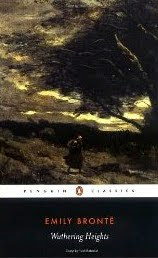
Book: Wuthering Heights by Emily Brontë (1847)

Wuthering Heights has enjoyed a recent return to popularity, thanks to some intertextual references in Stephenie Meyer's Twilight series--so it seems only appropriate that I finally got around to reading it.

Since I haven't read the Twilight series, and I don't consider myself particularly sappy, I was surprised to find myself siding with (randomly selected) Twilight fan Hayley Mears, whom the Guardian quotes in an online review saying: "I was really disappointed when reading this book, it's made to believe [sic] to be one of the greatest love stories ever told and I found only five pages out of the whole book about there [sic] love and the rest filled with bitterness and pain and other peoples [sic] stories".

"Bitterness and pain" is right. (And all the [sic]s in there are right, too, because this book is pretty [sic].) Essentially, this is the story of two snarling, brutish, semi-wild children who love each other in their animalistic way, but don't get together because one of them, Cathy, thinks she needs to marry someone with class and money. Her dismissal of Heathcliff, the vicious foundling she loves, for Edgar, the wimp who loves her, sets off a chain of about three-hundred pages of slow, conniving cruelty, as Heathcliff labors to destroy everyone involved in the affair, as well as their children, houses, and distant relations.

Academically, there are a few interesting things going on here. Wuthering Heights can be read as an early Victorian response to (or reworking of) Romanticism, and its approaches to nature and love are surprising for the way they show sympathy for a form of rawness that's otherwise unappealing (and uncharacteristic of the period). As a devotee of both the Burkean sublime and Nietzsche, I was interested in the interplay of rough, calamitous nature, the animal, and Heathcliff's slow-burning vengefulness…which all fits partially, but not very neatly (that's the interesting part), under those two moral/aesthetic frameworks.

But while a book's being "interesting" is normally enough to get me to like it, it wasn't enough here. At one point in the novel, Heathcliff expresses a wish to vivisect the other characters, and vivisection is a good metaphor for the novel as a whole. Reading about Heathcliff is like watching a troubled teen slowly cut a wriggling fish apart--you get upset at the cruelty of the thing, but the whole affair doesn't have much dramatic interest; you walk away feeling bored, sad, and wondering what the point of it all was. The novel doesn't have the psychological insight of a Jane Eyre, or the social complexity of a Bleak House. Curious readers, I give this one an "avoid."

Books That Matter: Ishmael

The controversy surrounding Ishmael began even before its publication--it won the massive, one-time-only Turner Tomorrow Prize, and immediately the highly literary judges who chose it began to denounce the selection process. (They said it required them to give too much money to one book in a pool of titles they weren't over-the-top enthusiastic about.)

Personally, I remember my mom reading Ishmael as part of a book club when I was a little kid, but I didn't read it myself until college, when it was the chosen selection of a backpacking group I was involved in. I'm hesitant to include it on any list of "books that influenced me" because of its cultish appeal...it's one of those books, like Zen and the Art of Motorcycle Maintenance, or any Ayn Rand novel, that seems to pigeonhole you as a certain type the second you admit that it mattered to you.

Still, it did matter to me, because it was the first thing I read that really drove home the ethical implications of the idea that evolution is not directional. It wasn't until I read Ishmael, in other words, that I recognized that every time someone uses a phrase like "saves lives," they only mean "human lives"--and that, world as it is, saving human lives implies significant destruction of other forms of life, often at a permanent, species level that alters and destroys ecosystems.

This is where the "we can have it all" do-gooders jump in and say "We can save both! We can save human lives, and help the world, and if you save humans then, in the long run, environmental impacts decrease!" But that kind of optimism seems like an excuse not to confront the problem, so that while we wait for the (uncertain) effects of the environmental Kuznets curve to kick in, the world--the real world, not just the human world--disintegrates.

It made me realize that every "charitable" decision made to help another human being already contains a dangerously unexplored ethical decision, because it narrows charity to the species that needs it the least. Whatever you want to do in the face of that realization, I think it's important that people realize it. Unfortunately, most of today's philanthropists (a word that literally means, in Greek, "human lovers") cheerfully sweep it under the table.*

So I thank Ishmael for turning me into the kind of smart aleck who listens to your heartwarming description of some wonderful humanitarian, then raises a finger and says something like, "Excuse me, but it seems you're being anthropocentric. You only care about your own species, so even your idea of charity is secretly selfish." Then I smirk and walk away, because I'm even more self-righteously selfless than you are.

*See, for instance, this recent article by Peter Singer, who wonders whether people should stop reproducing...but only because he's worried about human suffering from climate change. (Any emphasis on suffering is a sign that the speaker is primarily worried about humans and human-like creatures, who suffer in ways recognizable to humans. Additionally, it seems like a minor tragedy that worrying about "climate change" has become almost synonymous with "environmentalism.") Or check out this profile of Melinda Gates and the Gates Foundation, where Bill Gates expresses concern about human overpopulation...only to forget about it at the first mention of a possible (and, I think, majorly inadequate) counterargument. Needless to say, both the Gates Foundation and Singer are considered revolutionary thinkers in the world of philanthropy--the Vogue profile notes that the Gates Foundation focuses on "problems that nobody else seems to care about"--and even they can't seem to get past a humans-only orientation. Sigh.

Book: The Warden by Anthony Trollope (1855)

The Warden was my first Trollope. It was--as its recommender explained to me--like a warm cup of tea. It wasn't very intense, but it was sort of soothing in its mild way, and I could see Trollope turning into a calming pre-bedtime ritual. This particular novel is about a kind-hearted old clergyman who finds himself in the center of a scandal about misappropriation of funds. The man who hopes to oust the warden is, in a romantic twist, also in love with his daughter.

The chief attractions of The Warden are its length--it's that rarity among the Victorians, a short novel--and the relative complexity of its politics. Trollope has a couple of tirades about nineteenth-century reformers in here, directed at progressive newspapers (The Times, dubbed "The Thunderer"), Thomas Carlyle ("Dr. Pessimist Anticant"), and Charles Dickens ("Mr. Popular Sentiment"). Those are amusing to anyone "in the know" about the nineteenth century, but more broadly speaking, these attacks are signs that Trollope cared about the motivations and effects of high-minded political reforms on various lives. He hesitated, in other words, to embrace reform in any simplistic manner. That leaves him open to criticism that he supported the evils of politics-as-usual, but it also means he portrays politics in ways that feel refreshingly three-dimensional.

One drawback of this approach is that there aren't a lot of those "point-and-laugh" moments you get with traditional satire. It isn't, in other words, "fun." There's no exciting crusading here, and no easy right-and-wrong, so the emotional tenor of the novel is smooth and steady instead of compelling. The satire that's left often takes that eighteenth-century form of giving characters unrealistic but revealing names (see above)--the rash reformer's name is "Bold," for example. And while the characters are more complex than their names, they're still sketchily drawn. (The politics may have three dimensions, but the characters mostly have two.) There's little psychological exploration here, but the characters' thinness helps the novel remain slim.

In short, this one is probably for enthusiasts, or for people who have to squeeze in a quick nineteenth-century novel--I can imagine it working in a Victorian Fiction survey. Personally, I took it in poolside, which fit nicely with its untaxing nature.

Books That Matter: Amazing Snakes

In the past six months, a lot of blogs have been passing around a meme where bloggers list “books that influenced me the most.” The game’s no fun if you don’t play fair…the books that influence you the most aren’t necessarily your current “favorites”—in fact, I don’t think you’re doing the job right if you don’t have some weird or embarrassing things on there. So, at intervals, I’ll be posting books that changed the way I think about life.

This week: Eyewitness Juniors’ Amazing Snakes.

image

Amazing Snakes, like everything else published by the geniuses at Eyewitness, featured pages dominated by a stunning central image (of a snake, in this case), surrounded by littler pictures and facts—about how many mice could be killed by a drop of the venom of a cobra, how fast a boomslang could strike, etc.

Published in the late ’80s, the Amazing series came along at just the right time to have a massive, lasting impact on my childhood psyche. I’ll never forget the incredible feeling of running up to an adult, squeaking, “Did you know that the Gaboon Viper has the longest fangs of any snake in the world?!” And hearing the crushing humiliation in their voices as they muttered back: “No…I did not.”

That is how I learned that knowledge is power. And that’s probably why I’m pursuing a graduate degree in the humanities today: to become the most powerful person in the world.