Pages

Showing posts with label reviews. Show all posts

The Wire and Treme: David Simon Keeps It "Real"

Every once in a while, I open to an article in the New York Review of Books that makes me feel like I've accidentally stumbled into a guest lecture at some kind of intellectual retirement home. The subject matter seems exciting and relevant, the author seems promising--then it devolves into an explanation of basic cultural phenomena to an audience assumed to be hopelessly out of touch.

That's how I felt when I read Charles Petersen's "In the World of Facebook" earlier this year. Its rants describe "the mechanics" of superficial Web-era friendships in a way that seems almost calculated to excite "why-I-never" cane-shaking among anyone still fighting the good fight against the Internet. That's also how I felt recently when reading Lorrie Moore's piece on The Wire.

I always get excited when I see writing about The Wire. That excitement comes partially from hometown pride, and partially from the fact that I think we're living in the golden age of television, and we should be talking about TV shows a lot more than we talk about, oh, Jonathan Franzen for instance. Add to that the fact that Lorrie Moore is a great writer, and you'd seem to have the perfect formula for a great article. (I don't know if Charles Petersen is great, because according to my superficial Web-era scholarship, he appears to be a deceased Danish boxer.)

Imagine my disappointment, then, when I discovered that Moore's piece more or less describes the entire series to an audience who is assumed not to have heard about it, or to have heard of it only to call out "HWAT'S THAT DEARIE?!" and turn up the volume on their hearing aids. I kept waiting for Moore's incisive account of the series to materialize, but instead I got summary sprinkled with helpful glosses that remind us that "the game" is what "the drug business is called." Thanks?

Most surprisingly, Moore never questions the blue-collar snobbery implicit in much of what The Wire thinks it's teaching us. Instead--perhaps out of guilt for her own relatively white and relatively middle-class subject matter?--she argues that the series's use of the inner city

might be seen as a quiet rebuke to its own great living novelists, Anne Tyler and John Barth, both of whose exquisitely styled prose could be accused of having turned its back on the deep inner workings of the city that executive producer David Simon, a former Baltimore reporter, and producer Ed Burns, a former Baltimore schoolteacher and cop, have excavated with such daring and success.
Well, sure, the series certainly wants to be seen that way. Its form of realism is one that denies "reality" to anyone who isn't taking part in a life-or-death struggle of some kind--which makes for great drama, but leads to characters whose three-dimensionality fades as their socio-economic status climbs higher and higher above the poverty line. As a result, there's a serious omission from the otherwise breathtaking sweep of The Wire's social survey of Baltimore: the residents of leafy neighborhoods like Guilford, Roland Park, and farther north into the county, the kinds of places where I spent my first 18 years.


All of that gets classed as "Leave-It-to-Beaver Land" in the phrase from The Wire that Moore admires, but I keep asking myself what to make of that exclusion, and what it means for The Wire's ability to accurately represent the kinds of social and economic transactions that lead to urban problems like Baltimore's. In Simon's work, the upper classes are offstage presences who serve alternatively to mark social immobility (like when D'Angelo Barksdale looks despairingly around the Prime Rib in season 1) or to initiate and benefit from the misery of "real" Baltimoreans (like when Nick Sobotka heckles Carcetti's conversion of the waterfront into condos, or bemoans the re-classification of his family's rowhouse as a "Federal Hill" property). The politics of what counts as real in The Wire is one of the most insistent and problematic parts of its social vision, and it's disappointing to watch Moore let it pass with nothing but a polite golf clap.

Compare Moore's largely congratulatory descriptions of The Wire with Nicholas Lemann's take on Simon's latest project, Treme. Lemann's analysis appeared only a week earlier, but his descriptions of what goes right, and wrong, with Treme are wonderful. He recognizes the series's insecurity about proving itself as a "real" depiction of New Orleans, and the awkwardness that results as Treme repetitively flashes its street cred to audiences. Lemann also rightly identifies Simon's inability to portray wealthy families clearly. He makes a mistake, however, in assuming that issues of reality and authenticity weren't a problem for The Wire, where Simon and his writers could more easily access a local perspective. The issues are there, but they're muffled by their alignment with the typical conflation of the low with the real.

There is, in other words, a big portion of society--in fact, the portion that used to be called Society--that never really makes it into Simon's view of the world. You have to wonder how that impairs his ability, and his projects' ability, to tackle the issues they claim to depict so accurately. It's a weird reverse ghettoization: wealthy North Baltimoreans see the origins of social ills in the form of the occasional member of the underclass who comes into their neighborhoods to steal from them; advocates of the underclass see the origins of social ills in the form of the wealthy who come into their neighborhoods to steal from them. Simon is a master of the second version of the narrative, and he does it beautifully, powerfully, and unforgettably. But at some point it seems as if maybe, to effect any real kind of change, we need a new story.

Book: Villette by Charlotte Brontë (1853)

"Quietly devastating" is one of those elegant journalistic clichés that pop up regularly in book and movie reviews to applaud a particular kind of stylistic understatement. It's like the hyperliterate and depressing counterpart to "feel-good comedy of the year"--a phrase that seems made for blurbing a certain form of recognizably literary literature. Regardless of how well-worn the phrase is, I can't think of any more apt way to summarize Villette, Charlotte Brontë's beloved final novel.

Like Jane Eyre, Villette is a coming-of-age story told in the first person by a plain-looking young woman struggling for financial independence. And like Jane Eyre, it is slowly absorbing. For the most part, though, plain Jane is a straightforward narrator, whereas Villette's Lucy Snowe gradually reveals to the reader that she is a puzzle, and intentionally so. Rather than describing difficult passages in her life, she wanders off into elaborate metaphors, like the famous shipwreck image that she uses in place of an actual explanation for why she leaves England for Belgium:

For many days and nights neither sun nor stars appeared; we cast with our hands the tackling out of the ship; a heavy tempest lay on us; all hope that we should be saved was taken away. In fine, the ship was lost, the crew perished.
We never find out what exactly happened here, and it's the first of many times that Lucy Snowe obscures or dodges events happening in her life. Eventually the disruption of these narrative cover-ups becomes more predictable and almost pleasurable: there is a sense of getting to know Lucy Snowe, and guessing what kind of information she may be withholding from us.

If all that sounds pretty psychologically sophisticated for a novel from 1853, I think that's because it is--and it's probably why Villette has come up several times in recent conversations with professors about the greatest novels of all time. The delight in learning to second-guess a fictional speaker is something that seems more common in Victorian poetry (think the dramatic monologue, e.g.Tennyson's "Ulysses"--even if a lot of people do read it straight--and of course R. Browning) than in the period's novels. In Villette, though, narratorial unreliability becomes more of an endearing quirk than a damning "gotcha"--we get close to Lucy Snowe by learning how she tries to put distance between herself and us. The pleasure of that growing intimacy, and the final turns by which it's shattered, make the conclusion almost unbearable. There isn't much in the way of redemption here, but there is a lot in the way of power. This really is one of the greats. Highly recommended.

Book: What Is Posthumanism? by Cary Wolfe (2010)

The title of What Is Posthumanism? may be a little bit misleading. Wolfe's book isn't exactly a primer in the idea or methodologies of posthumanism. (With the possible exception of the introduction, I have a hard time imagining assigning this book, or most selections from it, in an undergrad course on the topic.) What it is instead is a collection of essays roughly divided into two sections.

The first section examines the way that posthumanism and systems theory fit within academic and philosophical debates of the last fifty years or so. I can't emphasize enough how useful this was to me. I don't come from a theory-heavy background, and most of the thinkers branded "post-structuralist" and associated with deconstruction--e.g., Derrida, Deleuze, etc.--have always left a bad taste in my mouth. They are obscurantists; they use densely packed jargon and flirtatious French puns to camouflage the generally unremarkable character of their thought.

Wolfe has me seriously questioning that dismissal. Derrida is a cornerstone of the first half of his book, and he successfully shows how Derrida's formulations, which seem so inaccessible, are actually struggling with the same problems that systems theory is trying to tackle. It's hard to paraphrase these problems briefly, but I'll try. They center on the question of how, in a world of largely arbitrary distinctions (the arbitrariness of language, for example, or the arbitrariness of species divisions), meaning can be generated in anything like a stable fashion. In the process of showing how Derrida and systems theorists are both working toward the same answer from opposite directions, Wolfe implies--I think--that so-called post-structuralists and systems theorists are both still striving after the dream of a theory of everything, a theory that might unite all fields of study along some common principles. That idea is one I associate with structuralism, as Robert Scholes outlines it in his 1975 book Structuralism in Literature: An Introduction. All of which means that cultural studies since 1970--which is often attacked for growing increasingly chaotic and directionless, always chasing after the "next big thing"--may actually have a more coherent and defensible story of development than is normally thought.

Wolfe's other meditations on disciplinarity are also useful. His division of various famous critics and philosophers in terms of their concerns (humanist or posthumanist) and their disciplinary relations/knowledge organization (humanist or posthumanist) is really thought-provoking. According to this rubric (which comes with its own handy chart), it's possible to tackle supposedly revolutionary posthumanist subjects--the ethics of our treatment of animals, for instance--in humanist ways that dampen or nullify what might be most interesting about the topic. Thus, someone like Peter Singer practices a humanist take on posthumanist concerns (a humanist posthumanism), whereas someone like Bruno Latour practices a posthumanist posthumanism. This seems like a crucial distinction to me, and I don't know of anyone else theorizing it as clearly as Wolfe. My one major complaint here centers on Wolfe's ideas about animal studies. He never even mentions what seems, to me, like an obvious question: if we're going to question the way we use arbitrary distinctions like species barriers, why does that questioning implicitly stop at the animal kingdom? What about our understanding of plants, fungi, etc.? And if those seem like absurd questions, I'd like to hear someone as clear-minded as Wolfe explain why that should be the case.

The second half of the book consists of studies of individual works of art--the theory of the first section put into practice. Most of Wolfe's readings consist of syntheses of a few key thinkers (Derrida, Luhmann) to overturn previous consensus about the meaning of, say, Dancer in the Dark or Emerson's idea of the self. These applications often rehash the same theoretical ideas, but not in a bad way: posthumanism and systems theory can be abstract and counterintuitive, so it helps that the ideas are repeatedly hammered home. Especially nice is the critique of visuality that bubbles, submerged, through most of these readings. Key insights or definitions pop up in these readings in ways that might be better organized, but that just makes reading the book in its entirety more vital. For example, here's a definition of systems theory (which is always hard to explain) from a chapter on architectural proposals:

[T]he conceptual apparatus of systems theory . . . is based on the central innovation of replacing the familiar ontological dualities of the philosophical tradition--chiefly, for our purposes, culture and nature--with the functional distinction between system and environment. (205)
Yes, it's still wordy, and it requires examples to explain why it's so useful in understanding the world--but it's a great start. So is the rest of this book. It may not be organized as an ideal introduction, but it works as a good point of entry for someone roughly familiar with current ideas in literary study. I expect I'll be combing through its references and footnotes for a long time to come.

Book: Barchester Towers by Anthony Trollope (1857)

One of my first reviews on Nifty Rictus was of Anthony Trollope's The Warden. I recently had the mixed pleasure of reading its sequel, Barchester Towers--the second in the six-novel Chronicles of Barsetshire series--with an informal Victorian Fiction reading group, so it seems only appropriate that I post some thoughts on it.

The first half of Barchester Towers feels familiar. We're reintroduced to Septimus Harding, his daughter Eleanor, his son-in-law Archdeacon Grantly, and an expanded cast of characters that includes many of the minor players in The Warden. In fact, the set up is almost like an extended remix of The Warden: without giving too much away, Eleanor is once again a desirable single woman, and Mr. Harding is once again in a position where he can be tortured by the ethical implications of accepting a controversial clerical appointment.

Stylistically, the early parts of Barchester Towers show us an author who is unable to control one of the most horrible habits of nineteenth-century novelists, a habit that I'm convinced Trollope picked up from Thackeray: the mock-epic tone. Instead of giving straightforward descriptions of, say, a dinner party, Trollope endlessly ridicules his characters by comparing their every act to some heroic deed the act doesn't remotely resemble. While this is supposed to amuse us, it is clumsy and overused here, and it feels juvenile.

The second half of the book picks up substantially. The mock-epic treatment drops away as Trollope grows emotionally invested in the complex tangle of his characters' personal and professional lives. (Even this pattern of mock epic giving way to more sophisticated seriousness feels Thackerayan--I have almost exactly the same experience reading Vanity Fair.) Best of all, Eleanor goes from a daddy-loving cipher to a stubborn and realistic character--a welcome change that makes the novel's emotional climax all the more touching and satisfying.

Still, it's a bit of a slog to get there. Trollope's sketches of characters like the Thornes and the Stanhopes are brilliant throughout--the Stanhopes, our group decided, are straight out of a Wes Anderson film--but the author stumbles in his early attempts to put them into action. If you can wade through that (or if you chortle every time a dinner comment is compared to volley of arrows), it's a worthy read. Otherwise, I might pick up something else...maybe even (as I'll discuss in another post) Trollope's Autobiography.

Movie: "Fur: An Imaginary Portrait of Diane Arbus" (dir. Steven Shainberg, 2006)

"Fur" is intended, not as an accurate biopic, but as "an imaginary portrait" of the photographer's "inner experience," a text warns at the beginning of the film. I've never read Patricia Bosworth's biography of Diane Arbus--which supposedly inspired Erin Cressida Wilson to write "Fur"--so it's hard to judge how accurately the photographer's psyche is rendered here. But even apart from any standard of truth, the story told by "Fur" has its advantages--and shortcomings.

The biggest liberty taken in the film is the invention of Lionel Sweeney (Robert Downey, Jr.), a man who moves into an apartment above Arbus (Nicole Kidman) and her family. Lionel, who suffers from hypertrichosis--a disease that covers his entire body and face in hair--introduces Arbus to his social circle of freaks and outcasts, which gives her the courage to take up photography outside the oppressive constraints of her husband's photography studio.

The first thing to note about "Fur" is that it is gorgeous--visually and aurally, it is richly sensual, and every performance in the film is striking. The writer-director team of Wilson and Shainberg also deserves credit for pushing the envelope on themes of fear, violence, and sexuality, as they did in their earlier collaboration, "Secretary." Arbus's pleasurable and even sexual fascination with things that frighten her makes "Fur" interesting. That interest is partially undercut, however, by a storyline that we all know too well: female free spirit suffers under domestic oppression until a surprising, risky experience reveals the magical world she has been missing. It doesn't help that Kidman played Virginia Woolf in "The Hours," which also capitalized on the same old story of which Woolf--with her repressive upbringing, marriage, artistic awakening, and final conflicted suicide--is such a convenient example. It's the stuff of a simplified Woolf biography, or of Kate Chopin's "The Awakening," or of Gilbert and Gubar's Madwoman in the Attic: the story of female originality suffering under restraint is beginning to feel unoriginal and, in fact, restraining.

There's also something unrealistic about the way "Fur" portrays freakishness--as if abnormality, like normality, were an actual "thing," a common code that could unite a community. To paraphrase Tolstoy, normal people are all alike, but every abnormal person is abnormal in their own way. What makes Arbus's body of work so interesting is that she managed to make everyone look freakish, an accomplishment that said very little about the world and very much about the workings of her own mind. By embodying freakishness in the figure of Lionel and his community of freaks who all somehow know and like each other, "Fur" turns Arbus from an expressionist--someone who shared her own nightmarish ideas of the world--into a reporter on a lovably off-kilter world already in existence.

What I can't decide is whether or not this transformation was intentional. As Susan Sontag notes in On Photography, Arbus herself talked about her work this way, acting as though her subjects were always as strange as they are in her portrayals, talking about them with "the childlike wonder of the pop mentality." So far as I can tell, then, "Fur" does seem to paint an accurate picture of the way Arbus described her "inner experience"; the problem is that Arbus's descriptions don't match up with her actual project. So to see Arbus's work from the inside is almost necessarily to misunderstand it as a kind of delightful vacation to a strange world. This movie beautifully renders that misunderstanding, but without context, it threatens to propagate and popularize an unrealistically uplifting ideal of her life and photographs. The most obvious limitation of this take on her work is that it renders her eventual suicide almost incomprehensible--and indeed, "Fur" ends without mentioning it.

Art Review: "Exposed" @ Tate Modern (London)

"Exposed" is sort of overwhelming--I had to visit twice to see the whole thing thoroughly, because the museum closed 3/4 of the way through my first visit. This sprawling, 14-room show, conceived by Sandra Phillips of SFMoMA, is a look at the ways photography has taken on issues of "exposure," particularly issues of voyeurism and surveillance. It is broadly divided into sections devoted to "The Unseen Photographer," "Celebrity and the Public Gaze," "Voyeurism & Desire," "Witnessing Violence," and "Surveillance."

The sheer amount of space devoted to "Exposed" means that the show can present some material in historically accurate ways that I, for one, have not had the chance to see before. Case in point: anyone reasonably familiar with photography as a tool for exploring sexuality has seen images from Nan Goldin's classic "Ballad of Sexual Dependency," but "Exposed" goes to the trouble of showing them in something like their original form--as a slideshow in a darkened room, set to the music of the Velvet Underground and others. Likewise, Japanese photographer Kohei Yoshiyuki's infrared images of couples and groups secretly having sex in parks in 1970s are displayed in a darkened room with spotlights--a reference to their original gallery presentation in the 1979, where guests in dark space were given flashlights to view them.

While the spread and treatment are nice, the show sometimes feels like too much. It needs some cutting and narrowing. The sporadic insertion of images by well-known streetshooters (Henri Cartier-Bresson, Robert Frank) feels especially intrustive, like big names unnecessarily larding a show that might have been more targeted. I found myself confused: were streetshooters featured because they exposed their subjects in everyday life, or because they hid their cameras for fear of their own exposure as thieves of others' images? That unexplored ambiguity seems, to me, typical of the show as a whole. It feels like the vast range of images gathered here is united only by the many things "Exposed" could mean. I would have liked to see a tighter sense of organizational principal, both historically and thematically, rather than a show that felt guided by the ambiguous pun of its verbal title.

Nevertheless, there's something to be said for capacious messiness. This is a rich show with something to delight (and, I think, surprise) almost anyone, from the photographic beginner to the more seasoned enthusiast. Alongside what I would consider "over"-exposed art historical names, It manages to include a number of less popular images and artists--it was especially impressive, I thought, on issues of celebrity fandom and sex. Cammie Toloui's pictures from the "Lusty Lady" series are a particularly fantastic choice. Shot from her point of view as she worked as a stripper in a San Francisco peepshow, Toloui's grainy black-and-white images occupy some unclear space in the network of gazes that forms between an erotic dancer and her (often exposed and masturbating) audience--a reflexive experience made visible as the reflection of Toloui's nude body in the glass divider blends uneasily with the images of her voyeurs on the other side.

Unfortunately, "Exposed" ends on a weak note, as the last section, which covers the hot-button issue of surveillance, is disappointingly cold. (The exceptions--Shizuka Yokomizo, Laurie Long--prove the rule.) That's less a curatorial blunder than a reflection of what I see as the stagnation of a lot of contemporary political photography. Historical selections can be excused for unfetching aerial images of, say, Normandy on D-Day. But contemporary photographers also seem unable to make surveillance images interesting. They tend towards either dull, grainy pictures of current surveillance tools, or conceptual work that justifies its bland visuals with chunks of text--text which, by the time you get to this room, you will probably be too tired to read. Both approaches seem like poor ways of capturing public attention on issues of pressing social importance.

The whimper that ends this show is driven home by an installation located outside the (surprisingly excellent) gift shop. While it's unrelated to "Exposed," it captures what's broadly wrong with the surveillance part of the exhibit. Called "Night Watch," by Francis Alÿs, the installation consists of a wall-sized array of closed-circuit televisions showing different rooms in the National Gallery. It appears as ponderous (and as boring) as many of the works in the surveillance section, but you stand before it a while anyway, just to look thoughtful--then something moves in one of the monitors.

It's a fox! This incongruous little animal, dashing from room to room of the museum and from television to television in the grid, embodies the kind of surprise and mystery you expect when you take on the role of voyeur. The playful artificiality of this introduction of a wild animal to the museum may offend the high moral seriousness of much of the surveillance work, but it makes you think a lot more about your expectations and desires, as a watcher and as a human being, than the more overtly political work that ends the exhibit…and isn't that, after all, what good art is supposed to do?


"Exposed" runs at the Tate Modern in London through October 3, 2010.

Other takes on the show:
3quarksdaily, the Guardian.

Images, from top, copyright Kohei Yoshiyuki, Cammie Toloui, and Francis Alÿs.

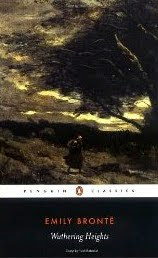
Book: Wuthering Heights by Emily Brontë (1847)

Wuthering Heights has enjoyed a recent return to popularity, thanks to some intertextual references in Stephenie Meyer's Twilight series--so it seems only appropriate that I finally got around to reading it.

Since I haven't read the Twilight series, and I don't consider myself particularly sappy, I was surprised to find myself siding with (randomly selected) Twilight fan Hayley Mears, whom the Guardian quotes in an online review saying: "I was really disappointed when reading this book, it's made to believe [sic] to be one of the greatest love stories ever told and I found only five pages out of the whole book about there [sic] love and the rest filled with bitterness and pain and other peoples [sic] stories".

"Bitterness and pain" is right. (And all the [sic]s in there are right, too, because this book is pretty [sic].) Essentially, this is the story of two snarling, brutish, semi-wild children who love each other in their animalistic way, but don't get together because one of them, Cathy, thinks she needs to marry someone with class and money. Her dismissal of Heathcliff, the vicious foundling she loves, for Edgar, the wimp who loves her, sets off a chain of about three-hundred pages of slow, conniving cruelty, as Heathcliff labors to destroy everyone involved in the affair, as well as their children, houses, and distant relations.

Academically, there are a few interesting things going on here. Wuthering Heights can be read as an early Victorian response to (or reworking of) Romanticism, and its approaches to nature and love are surprising for the way they show sympathy for a form of rawness that's otherwise unappealing (and uncharacteristic of the period). As a devotee of both the Burkean sublime and Nietzsche, I was interested in the interplay of rough, calamitous nature, the animal, and Heathcliff's slow-burning vengefulness…which all fits partially, but not very neatly (that's the interesting part), under those two moral/aesthetic frameworks.

But while a book's being "interesting" is normally enough to get me to like it, it wasn't enough here. At one point in the novel, Heathcliff expresses a wish to vivisect the other characters, and vivisection is a good metaphor for the novel as a whole. Reading about Heathcliff is like watching a troubled teen slowly cut a wriggling fish apart--you get upset at the cruelty of the thing, but the whole affair doesn't have much dramatic interest; you walk away feeling bored, sad, and wondering what the point of it all was. The novel doesn't have the psychological insight of a Jane Eyre, or the social complexity of a Bleak House. Curious readers, I give this one an "avoid."

Movie: "Harry Brown" (dir. Daniel Barber)

Harry Brown belongs to the ever-popular genre of revenge movies, in which one man finally snaps and turns vigilante on the thugs who have destroyed his life. In this case, Michael Caine does a fine job portraying a retired British pensioner and war veteran living in cheap high-rises overrun by violent young delinquents. "Delinquents" is too soft a word, because these villains are more horrifying than usual--but at the same time, it feels appropriate because so much stress is laid in the movie on the generational gaps separating Caine (and his terrified chess partner) from the teenage nihilists who control his neighborhood. When Caine finally decides to strike back, his initial vulnerability and hesitance are overcome by the utter atrocity of the drug lords and hoppers around him.

This atrocity is, more than anything, what sets Harry Brown apart from the various related genre pieces that it samples liberally. Plotwise, this is more or less a British Gran Torino without any comedy or redemption; some of the drug lords look a lot like the infected from 28 Days Later (which helps heighten their brutal inhumanity); and the sense of an anonymous evil force is emphasized by scenes of invisible high-rise residents showering goods on the police that come straight out of The Wire.

If all these echoes make Harry Brown sound less original than it might have been, the movie still comes together into an entertaining and disturbing whole that adds something to the genre. Caine's performance is offset by Emily Mortimer's kindly but rule-bound detective, whose almost maternal pity for Brown struggles against her dawning awareness of his vigilantism--an emotional complication that provides a suspenseful counterpoint to the one-man shoot-'em-up storyline.

Furthermore, part of what makes it interesting is what it shares with a movie like Gran Torino. Both movies go out of their way to stage the revenge plot as a conflict between a now feeble, grandfatherly man and a pack of dangerously undisciplined youth. They seem to be defining a specific sub-genre of revenge flick, one troubled by the idea that old-fashioned father figures are disappearing only to be replaced by bureaucrats and kind souls inadequate to the task at hand. Unable to come to any easy solution, they bring back Father for one last high-caliber and riveting metaphorical spanking.

Book: The Warden by Anthony Trollope (1855)

The Warden was my first Trollope. It was--as its recommender explained to me--like a warm cup of tea. It wasn't very intense, but it was sort of soothing in its mild way, and I could see Trollope turning into a calming pre-bedtime ritual. This particular novel is about a kind-hearted old clergyman who finds himself in the center of a scandal about misappropriation of funds. The man who hopes to oust the warden is, in a romantic twist, also in love with his daughter.

The chief attractions of The Warden are its length--it's that rarity among the Victorians, a short novel--and the relative complexity of its politics. Trollope has a couple of tirades about nineteenth-century reformers in here, directed at progressive newspapers (The Times, dubbed "The Thunderer"), Thomas Carlyle ("Dr. Pessimist Anticant"), and Charles Dickens ("Mr. Popular Sentiment"). Those are amusing to anyone "in the know" about the nineteenth century, but more broadly speaking, these attacks are signs that Trollope cared about the motivations and effects of high-minded political reforms on various lives. He hesitated, in other words, to embrace reform in any simplistic manner. That leaves him open to criticism that he supported the evils of politics-as-usual, but it also means he portrays politics in ways that feel refreshingly three-dimensional.

One drawback of this approach is that there aren't a lot of those "point-and-laugh" moments you get with traditional satire. It isn't, in other words, "fun." There's no exciting crusading here, and no easy right-and-wrong, so the emotional tenor of the novel is smooth and steady instead of compelling. The satire that's left often takes that eighteenth-century form of giving characters unrealistic but revealing names (see above)--the rash reformer's name is "Bold," for example. And while the characters are more complex than their names, they're still sketchily drawn. (The politics may have three dimensions, but the characters mostly have two.) There's little psychological exploration here, but the characters' thinness helps the novel remain slim.

In short, this one is probably for enthusiasts, or for people who have to squeeze in a quick nineteenth-century novel--I can imagine it working in a Victorian Fiction survey. Personally, I took it in poolside, which fit nicely with its untaxing nature.